


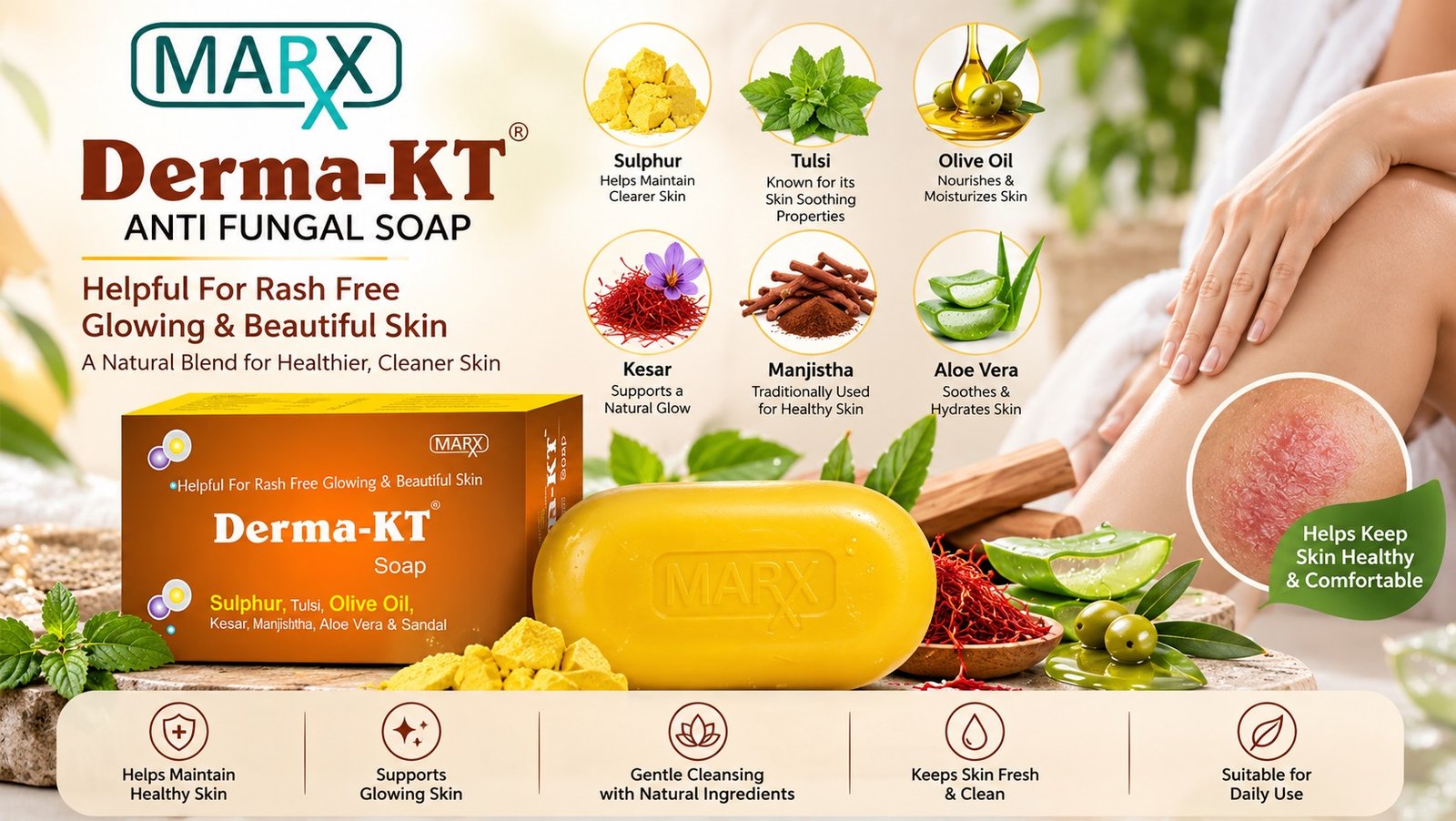
DERMA-KT Anti Fungal Soap: A Thoughtful Approach to Skin Hygiene and Care
Healthy skin starts with consistent hygiene, suitable personal care products and an understanding of what your skin needs. From cleansing away everyday impurities to recognising when a skin concern requires professional attention, small decisions can make a difference to a person’s skincare routine.
DERMA-KT Soap by Marxx Pharma is presented on its packaging as a soap intended to support clean, glowing-looking skin. The visible label highlights ingredients including sulphur, tulsi, olive oil, kesar and other traditional skincare ingredients.
For consumers exploring soaps marketed for skin hygiene and fungal skin concerns, it is important to understand the difference between a cleansing product and a proven antifungal treatment. A soap may help cleanse the skin, but its name or ingredient list alone does not establish that it can treat a fungal infection.
In this article, we look at DERMA-KT Soap, its visible packaging details, the general skincare roles of its listed ingredients and the importance of responsible skin care.
What Is DERMA-KT Anti Fungal Soap?
DERMA-KT Soap is a personal care product carrying the MARX brand on its packaging and associated with Marxx Pharma Pvt. Ltd. The supplied product image shows a yellow soap bar with yellow-and-brown packaging.
The visible packaging highlights ingredients including:
- Sulphur
- Tulsi
- Olive oil
- Kesar
- Manjistha
- Aloe vera and/or sandalwood, although the label text is partly obscured in the supplied image
The packaging also uses language referring to skin hygiene and a glowing-looking complexion.
Before making specific claims about antifungal effectiveness, consumers should check the complete product label and approved product documentation for the exact formulation, intended use and any declared active ingredients.
This distinction matters because cleansing the skin and treating a fungal infection are not the same thing. A product intended to treat a fungal infection must be supported by the appropriate formulation, evidence and applicable regulatory status.
Why Does Everyday Skin Hygiene Matter?
The skin is the body’s outer protective barrier. Everyday hygiene helps remove sweat, dirt and other surface impurities that can accumulate during normal activities.
A suitable cleansing routine can support comfort and general skin cleanliness. However, more washing does not always mean healthier skin. Excessive scrubbing, harsh cleansers or frequent washing with unsuitable products can cause dryness and irritation.
A practical skin hygiene routine may include:
- Cleansing with a product appropriate for your skin.
- Rinsing thoroughly after washing.
- Drying the skin gently, particularly in skin folds.
- Changing out of damp clothing after exercise or sweating.
- Avoiding the sharing of personal items such as towels.
- Seeking professional advice when a rash persists, spreads or causes significant discomfort.
For people who are prone to irritation, a gentle approach is often preferable to repeatedly washing or scrubbing an affected area.
Understanding the Ingredients Listed on DERMA-KT Packaging
The visible packaging identifies several ingredients commonly associated with personal care and traditional skincare. Their individual properties do not, by themselves, establish the effectiveness of the finished soap.
1. Sulphur: An Ingredient Used in Certain Skin Preparations
Sulphur is used in some topical skin preparations, depending on the formulation and intended use. It has a history of use in products developed for particular skin concerns.
Its effect depends on the concentration, formulation and purpose of the product. Sulphur-containing preparations may also cause dryness or irritation in some people.
The presence of sulphur on a soap label does not automatically prove that the product treats fungal infections. Check the product’s approved directions and claims before using it for a specific skin condition.
2. Tulsi: A Traditional Botanical Ingredient
Tulsi, also known as holy basil, has a long history of use in traditional Indian practices and appears in various personal care formulations.
Botanical ingredients are often included in skincare products for their traditional associations and formulation characteristics. However, evidence relating to a plant ingredient in general should not be treated as proof that a finished soap will provide a particular clinical benefit.
Consumers should review the complete formulation and follow the product’s instructions.
3. Olive Oil: Commonly Used in Personal Care Formulations
Olive oil is used in a range of personal care products, including soaps and moisturising formulations.
Depending on the formula, oils can contribute to a product’s cleansing and skin-feel characteristics. However, the effect of olive oil in a finished soap depends on how the product is formulated and used.
People with sensitive skin should monitor how their skin responds to any new cleansing product.
4. Kesar: A Traditional Skincare Ingredient
Kesar, or saffron, is used in traditional beauty and personal care products.
It is often associated with premium skincare positioning, but the presence of kesar does not establish that a soap will lighten skin, remove marks or deliver a guaranteed cosmetic result.
A responsible approach to skincare focuses on the complete product formulation, clear directions and realistic expectations.
5. Manjistha: A Botanical Used in Traditional Skincare
Manjistha is a botanical ingredient associated with traditional Ayurvedic practices and used in some personal care formulations.
Its presence on a product label can be relevant to consumers interested in botanical ingredients. However, traditional use alone does not establish the clinical effectiveness of a particular soap for fungal infections or other skin conditions.
6. Aloe Vera and Sandalwood: Confirm the Exact Label Information
Aloe vera and sandalwood are familiar ingredients in personal care products. Aloe vera is commonly used in skincare formulations, while sandalwood is associated with traditional fragrance and skincare practices.
The supplied image does not make the full ingredient wording entirely clear. Consumers should check the original packaging to confirm whether both ingredients are included and to review the complete ingredient list.
As with other botanical ingredients, their presence should not be interpreted as proof of a specific medical benefit.
Can DERMA-KT Soap Treat a Fungal Skin Infection?
This is an important question for anyone considering a product described as antifungal.
A soap should not be assumed to treat a fungal skin infection unless its intended use and effectiveness are appropriately established.
Fungal skin infections may cause symptoms such as itching, redness, scaling or ring-shaped patches. However, other skin conditions can produce similar symptoms, so a rash cannot always be identified accurately from appearance alone.
Treatment depends on the type and location of the infection. A healthcare professional may recommend a suitable antifungal medicine after assessing the symptoms.
When considering DERMA-KT Soap for a suspected fungal infection:
- Check the full product label for its declared intended use and directions.
- Do not rely on the product name alone to determine its medical effectiveness.
- Avoid applying the soap to broken, severely irritated or sensitive areas unless directed by a healthcare professional.
- Seek medical advice if symptoms persist, spread or recur.
- Do not delay appropriate treatment in favour of a cosmetic cleansing product.
People with extensive rashes, significant pain, fever, signs of infection or weakened immune systems should seek prompt medical advice.
How to Use a Cleansing Soap Responsibly
If DERMA-KT Soap is suitable for your intended use according to its label, the following general hygiene practices can help support a sensible routine.
Step 1: Read the product directions. Check the recommended method of use, warnings and any restrictions on where the soap should be applied.
Step 2: Wet the skin with lukewarm water. Avoid very hot water, which can aggravate dryness or discomfort.
Step 3: Cleanse gently. Avoid aggressive scrubbing, particularly over irritated skin.
Step 4: Rinse thoroughly. Remove the soap completely rather than leaving residue on the skin.
Step 5: Dry gently. Pat the skin dry with a clean towel, taking care around skin folds.
Step 6: Monitor your skin. Stop using the product if it causes persistent burning, significant redness, swelling or a rash, and seek medical advice if symptoms continue.
Always follow the product-specific instructions. These general steps are not a substitute for the directions on the actual packaging.
Who Should Take Extra Care When Choosing a Soap?
Not every cleansing product is suitable for every person or every skin concern.
Consider the following before choosing a soap:
- Sensitive skin: Review the complete ingredient list and stop using the product if irritation develops.
- Dry skin: Avoid excessive washing and choose a cleanser that does not leave your skin feeling uncomfortable.
- Existing rash or irritation: Do not assume that a new soap will resolve the underlying cause.
- Known ingredient sensitivity: Check the label carefully and avoid ingredients that have previously caused a reaction.
- Persistent skin symptoms: Seek professional advice instead of repeatedly switching products without understanding the cause.
If you are unsure whether a product is appropriate for a diagnosed skin condition, consult a qualified healthcare professional.
DERMA-KT and Responsible Personal Care
Personal care products are often selected based on ingredients, packaging, fragrance and the concerns they are marketed to address. But informed choices require more than marketing language.
Consumers should be able to understand what a product is intended for, how it should be used and what claims are supported by appropriate evidence.
For a soap marketed around skin hygiene or antifungal care, the distinction between a general cleanser and a treatment product is particularly important.
Responsible product communication should avoid guaranteeing that a soap will eliminate fungal infections, cure every rash or prevent all skin problems unless such claims are properly substantiated and permitted.
Clear information helps consumers choose products more confidently and recognise when professional treatment may be necessary.
Marxx Pharma Pvt. Ltd. and Its Product Portfolio
DERMA-KT Soap carries the MARX branding on the supplied packaging and is associated with the broader Marxx Pharma product portfolio.
Consumers and business partners looking for company information can explore the official website to review available products and related details.
Visit the official Marxx Pharma product portfolio.
Before purchasing or using DERMA-KT Soap for a specific skin concern, confirm the latest product details, complete ingredient list and intended use from the current packaging or official product documentation.
Frequently Asked Questions About DERMA-KT Soap
1. What is DERMA-KT Soap?
DERMA-KT Soap is a personal care soap shown in yellow-and-brown packaging under the MARX brand. Its visible label lists ingredients including sulphur, tulsi, olive oil, kesar and manjistha.
2. Is DERMA-KT Soap an antifungal treatment?
The product name alone does not establish that it is an effective antifungal treatment. Check its full label and approved product documentation for the intended use, active ingredients and supporting information.
3. Which ingredients are listed on DERMA-KT Soap packaging?
The visible packaging lists sulphur, tulsi, olive oil, kesar and manjistha. Additional wording is partly obscured, so the original label should be checked to confirm the complete ingredients.
4. Can soap alone cure a fungal infection?
Not every soap is designed or proven to treat fungal infections. Appropriate treatment depends on the type and location of the infection and may require a specific antifungal medicine recommended by a healthcare professional.
5. Can DERMA-KT Soap be used every day?
Follow the directions and recommended frequency on the product label. If the soap causes dryness, burning or irritation, discontinue use and seek advice if symptoms persist.
6. Is DERMA-KT Soap suitable for sensitive skin?
Suitability depends on the complete formulation and individual skin response. People with sensitive skin should review the ingredient list and exercise caution when introducing a new product.
7. When should I see a doctor about a skin rash?
Seek medical advice if a rash persists, spreads, recurs or causes significant discomfort. Prompt assessment is important if the rash is accompanied by fever, severe pain, swelling or other concerning symptoms.
8. Where can I learn more about Marxx Pharma products?
Visit the official Marxx Pharma product portfolio for company and product information.
Buy Product
Buy Now: Official Store.
Also Available on Messho & Leading Medical Stores


 Home
 Whishlist
 Checkout
 Account