


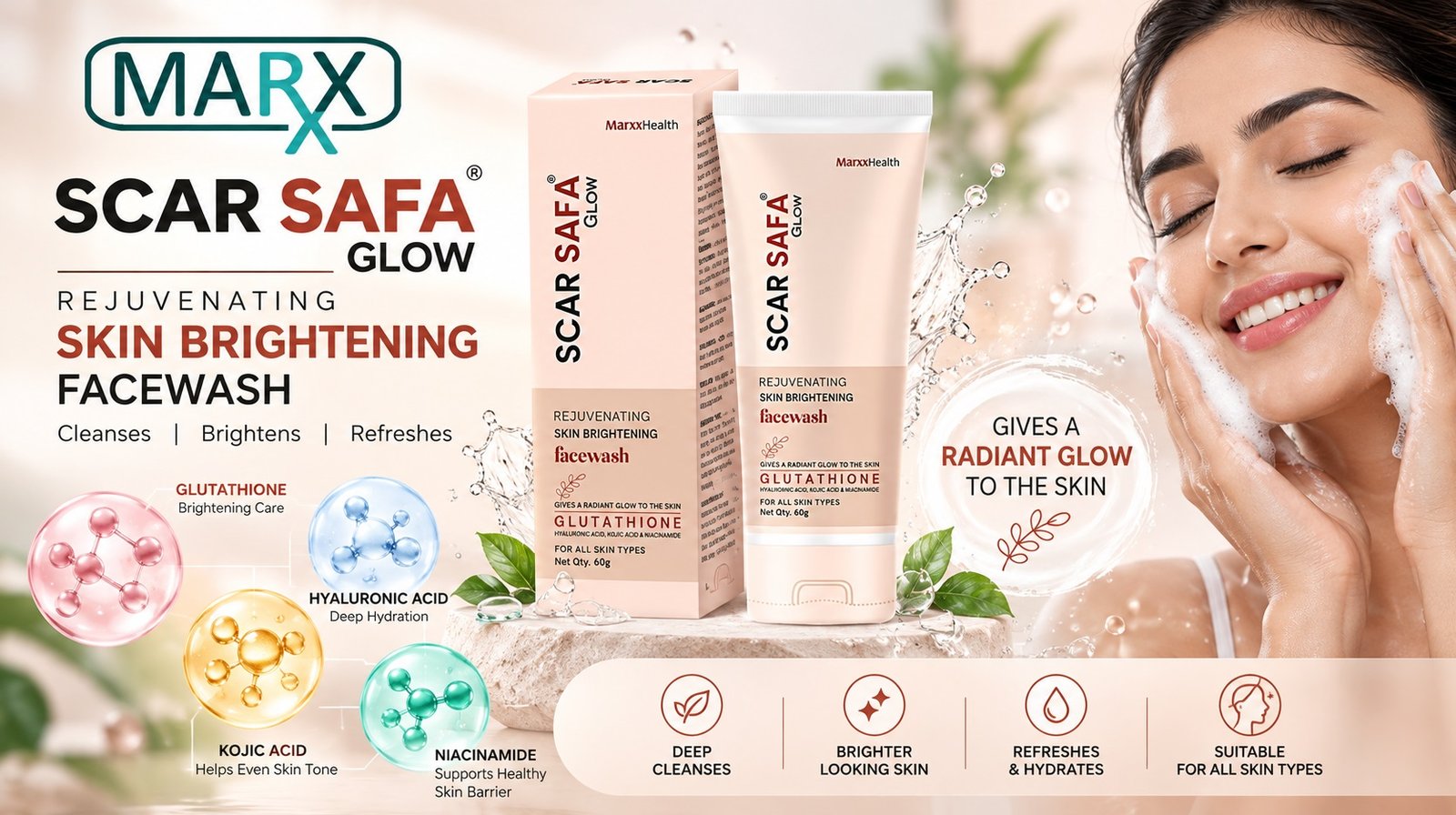
Scar Safa Glow Glutathione Facewash: A Fresh Perspective on Everyday Skincare
Healthy-looking skin starts with the small habits we practise every day. From cleansing away dirt and excess oil to choosing products that suit our skin, a thoughtful skincare routine can make everyday self-care feel simpler and more consistent.
Introducing Scar Safa Glow Glutathione Facewash by MarxxHealth, a facial cleanser presented with four recognisable skincare ingredients: glutathione, hyaluronic acid, kojic acid and niacinamide.
The product packaging describes it as a rejuvenating, skin-brightening facewash and indicates a net quantity of 60 g. Its ingredient combination brings together names associated with antioxidant-focused skincare, hydration, and the appearance of uneven skin tone.
But choosing a facewash should involve more than attractive packaging or familiar ingredients. Understanding what these ingredients are commonly used for, how facial cleansing fits into a routine and what to expect from a rinse-off product can help consumers make informed choices.
In this article, we explore Scar Safa Glow Glutathione Facewash, its listed ingredients and the principles of responsible everyday skincare.
What Is Scar Safa Glow Glutathione Facewash?
Scar Safa Glow Glutathione Facewash is a MarxxHealth-branded facial cleanser associated with Marxx Pharma Pvt. Ltd.
According to the supplied product packaging, the formula highlights:
- Glutathione
- Hyaluronic acid
- Kojic acid
- Niacinamide
The pack is labelled as a skin-brightening facewash and states that it is suitable for all skin types. It contains 60 g of product.
A facial cleanser is primarily used to remove everyday impurities, excess oil, sweat and residue from the skin’s surface. Ingredients may contribute additional formulation characteristics, but the actual performance of a product depends on its complete formulation, ingredient concentrations, pH and contact time with the skin.
For this reason, the listed ingredients should be understood as part of the product’s skincare positioning rather than as a guarantee of specific results.
Understanding the Key Ingredients in Scar Safa Glow Facewash
Ingredient awareness helps consumers understand why particular components appear in skincare formulations. Here is a closer look at the four ingredients highlighted on the packaging.
1. Glutathione: An Antioxidant-Associated Skincare Ingredient
Glutathione is an antioxidant naturally present in the human body. It plays a role in cellular processes that help manage oxidative stress.
In cosmetic skincare, glutathione is often associated with antioxidant-focused formulations and products marketed for a brighter-looking complexion. However, the evidence for particular cosmetic effects depends on the formulation, concentration, application method and available product-specific research.
It is important not to assume that a facewash containing glutathione will remove scars, permanently lighten skin or deliver a guaranteed change in complexion.
Because a facewash is rinsed off, its effects may also differ from those of a leave-on skincare product.
2. Hyaluronic Acid: Supporting Skin Hydration
Hyaluronic acid is widely used in skincare products because of its ability to bind water.
In cosmetic formulations, it is associated with hydration and a smoother-feeling skin surface. Its inclusion in a facial cleanser may contribute to the product’s overall formulation, although the result depends on the complete formula and how the product is used.
Cleansing should remove unwanted residue without leaving the skin feeling unnecessarily tight or uncomfortable. Choosing a cleanser that suits your skin’s needs is therefore an important part of everyday care.
3. Kojic Acid: An Ingredient Used in Uneven-Tone Skincare
Kojic acid is used in some cosmetic products designed to address the appearance of uneven skin tone and dark spots.
Its role in skincare is associated with processes involved in melanin production. However, the effect of kojic acid depends on factors such as concentration, formulation, stability and frequency of use.
A facewash containing kojic acid should not automatically be expected to treat persistent pigmentation or remove established scars. Rinse-off products may behave differently from leave-on treatments.
If you have ongoing pigmentation, melasma or a skin concern that is changing, a qualified dermatologist can help determine an appropriate approach.
4. Niacinamide: A Versatile Ingredient in Modern Skincare
Niacinamide, also known as vitamin B3, is a popular ingredient in skincare formulations.
Depending on the formulation and concentration, niacinamide may support the skin barrier and help improve the appearance of uneven tone. It is also used in products developed for different skin types and skincare goals.
Its presence in a facewash does not guarantee a particular outcome. The complete formulation, product directions and individual skin response all matter.
For consumers interested in ingredient-focused skincare, niacinamide is one component worth understanding when reviewing a product’s label.
What Does “Skin Brightening” Mean in Skincare?
The term skin brightening is widely used in the personal care industry, but it can mean different things in different contexts.
For some consumers, it refers to a fresher, more radiant-looking complexion. For others, it may refer to the appearance of dark spots or uneven skin tone.
These are not all the same concern.
A cleanser can help remove surface impurities that make skin look dull. Ingredients used in skincare may also be selected to support the appearance of smoother or more even-looking skin. However, results depend on the formulation and should not be assumed from the ingredient list alone.
Skin colour naturally varies between individuals. Responsible skincare focuses on skin health, comfort and realistic cosmetic goals rather than promising a particular complexion or a permanent change in skin colour.
Scar Safa Glow Facewash is presented as a skin-brightening cleanser. Consumers should evaluate its suitability through the full product label, directions and their individual skincare needs.
How to Use a Facewash in Your Daily Skincare Routine
A consistent cleansing routine does not need to be complicated. The aim is to clean the skin gently while avoiding unnecessary irritation.
Step 1: Wet Your Face
Use lukewarm water to wet your face. Very hot water can leave some skin feeling dry or uncomfortable.
Step 2: Apply the Facewash as Directed
Use the amount and method indicated on the product label. Avoid getting the cleanser into your eyes, and do not scrub aggressively.
Step 3: Rinse Thoroughly
Rinse the facewash away with water, ensuring that no unwanted residue remains around the hairline or other areas.
Step 4: Pat the Skin Dry
Use a clean, soft towel and pat rather than rub your skin.
Step 5: Follow With Suitable Skincare
If needed, apply a moisturiser appropriate for your skin type. During the day, use a suitable broad-spectrum sunscreen according to its directions.
Important: Follow the instructions printed on the Scar Safa Glow packaging. If the product causes persistent burning, swelling, significant redness or a rash, discontinue use and seek appropriate medical advice.
Is Scar Safa Glow Facewash Suitable for All Skin Types?
The supplied packaging states that the product is suitable for all skin types. Individual skin responses can still vary, particularly when a formulation includes ingredients associated with uneven-tone skincare.
Before using a new facewash, consider the following:
- Dry skin: Look for a cleanser that leaves your skin comfortable rather than tight or excessively dry.
- Oily skin: Choose a cleanser that removes excess oil without encouraging harsh scrubbing or over-cleansing.
- Combination skin: Pay attention to how different areas of your face respond.
- Sensitive skin: Review the complete ingredient list and introduce new products cautiously.
- Skin prone to irritation: Seek professional advice if you have a skin condition or have previously reacted to skincare products.
A patch test may help identify some reactions, but it cannot guarantee that a product will not cause irritation. Follow the product’s instructions and consult a healthcare professional if you are uncertain about suitability.
Facewash and Face Cream: Understanding the Difference
A facewash and a face cream serve different roles in a skincare routine.
| Facewash | Face cream |
|---|---|
| Primarily cleanses the skin | Usually remains on the skin after application |
| Rinsed off after use | Typically left on according to directions |
| Helps remove dirt, oil and residue | May provide moisturising or other cosmetic benefits |
| Contact time is relatively short | Contact time is generally longer |
This distinction matters when comparing skincare ingredients. The presence of the same ingredient in a cleanser and a leave-on cream does not mean both products will deliver the same effect.
The product format, formulation and intended use should always be considered.
Why a Simple and Consistent Skincare Routine Matters
Skincare trends often encourage people to try several products at once. But adding more products does not automatically lead to better results.
A simple routine can help people understand how their skin responds and make it easier to identify products that cause discomfort.
A practical everyday routine may include:
- A gentle cleanser suited to your skin.
- A moisturiser when needed.
- Broad-spectrum sunscreen during the day.
- Targeted skincare products selected for specific concerns, when appropriate.
Avoid combining multiple potentially irritating products without understanding how they work together. If you are treating persistent acne, pigmentation or another skin condition, professional advice may help you select an appropriate routine.
For consumers exploring Scar Safa Glow Facewash, the best starting point is to use the product as directed and consider how it fits into their existing skincare habits.
Responsible Skincare: What Consumers Should Know
Skincare products are often marketed with terms such as glow, brightening, rejuvenating and radiance. These descriptions can help communicate a product’s intended cosmetic positioning, but they should not be mistaken for proof of a specific clinical outcome.
Before purchasing a facewash, consider these practical checks:
- Read the complete ingredient list.
- Review the directions and warnings.
- Check the net quantity, batch details and expiry information.
- Understand whether the product is intended to be rinsed off or left on the skin.
- Be cautious of guaranteed claims about scar removal or permanent skin lightening.
- Seek professional advice for persistent skin concerns.
Responsible skincare is about making choices that suit your needs—not expecting one product to solve every concern.
MarxxHealth and Marxx Pharma Pvt. Ltd.
Scar Safa Glow Facewash carries the MarxxHealth brand on its packaging and is associated with Marxx Pharma Pvt. Ltd.
For consumers researching the company’s personal care and healthcare offerings, the official website provides a starting point for exploring its product portfolio.
Discover more through the official Marxx Pharma product portfolio.
Clear product information helps consumers understand what they are considering and where to find additional details. Before purchasing, review the current product listing and packaging to confirm the product information, directions and availability.
Frequently Asked Questions About Scar Safa Glow Glutathione Facewash
1. What is Scar Safa Glow Glutathione Facewash?
Scar Safa Glow Glutathione Facewash is a MarxxHealth-branded facial cleanser. Its packaging highlights glutathione, hyaluronic acid, kojic acid and niacinamide, and states a net quantity of 60 g.
2. What are the main ingredients in Scar Safa Glow Facewash?
The supplied packaging lists glutathione, hyaluronic acid, kojic acid and niacinamide. The exact concentrations and the complete formulation should be confirmed from the product’s full ingredient list.
3. What is glutathione facewash used for?
Glutathione is an antioxidant used in some skincare formulations and is often associated with products marketed for a brighter-looking complexion. The results of a particular facewash depend on its formulation and available evidence.
4. Can Scar Safa Glow Facewash remove scars?
The product name and ingredient list do not establish that the facewash removes scars. Different scars have different causes and may require assessment by a dermatologist.
5. Can this facewash help with dull-looking skin?
Cleansing can remove surface dirt, oil and residue that contribute to a dull appearance. Whether Scar Safa Glow produces additional visible effects depends on the finished formulation and individual skin response.
6. Is Scar Safa Glow Facewash suitable for all skin types?
The supplied packaging states that it is suitable for all skin types. However, individual tolerance varies. People with sensitive or reactive skin should review the full label and discontinue use if significant irritation occurs.
7. Can I use this facewash every day?
Follow the frequency and usage instructions printed on the product packaging. If you experience dryness or irritation, stop or reduce use as appropriate and seek professional advice if symptoms persist.
8. Should I use sunscreen after a skin-brightening facewash?
Daytime sun protection is an important part of a skincare routine, particularly when managing the appearance of uneven skin tone. Use a suitable broad-spectrum sunscreen according to its directions. A facewash should not be treated as a substitute for sunscreen unless it is specifically formulated and labelled for that purpose.
9. Who makes Scar Safa Glow Facewash?
The packaging identifies MarxxHealth as the brand. For company and product information, visit the official Marxx Pharma product portfolio.
Buy Product
Buy Now: Official Store.
Available on Amazon – Click Here
Also Available on Messho & Leading Medical Stores


 Home
 Whishlist
 Checkout
 Account